


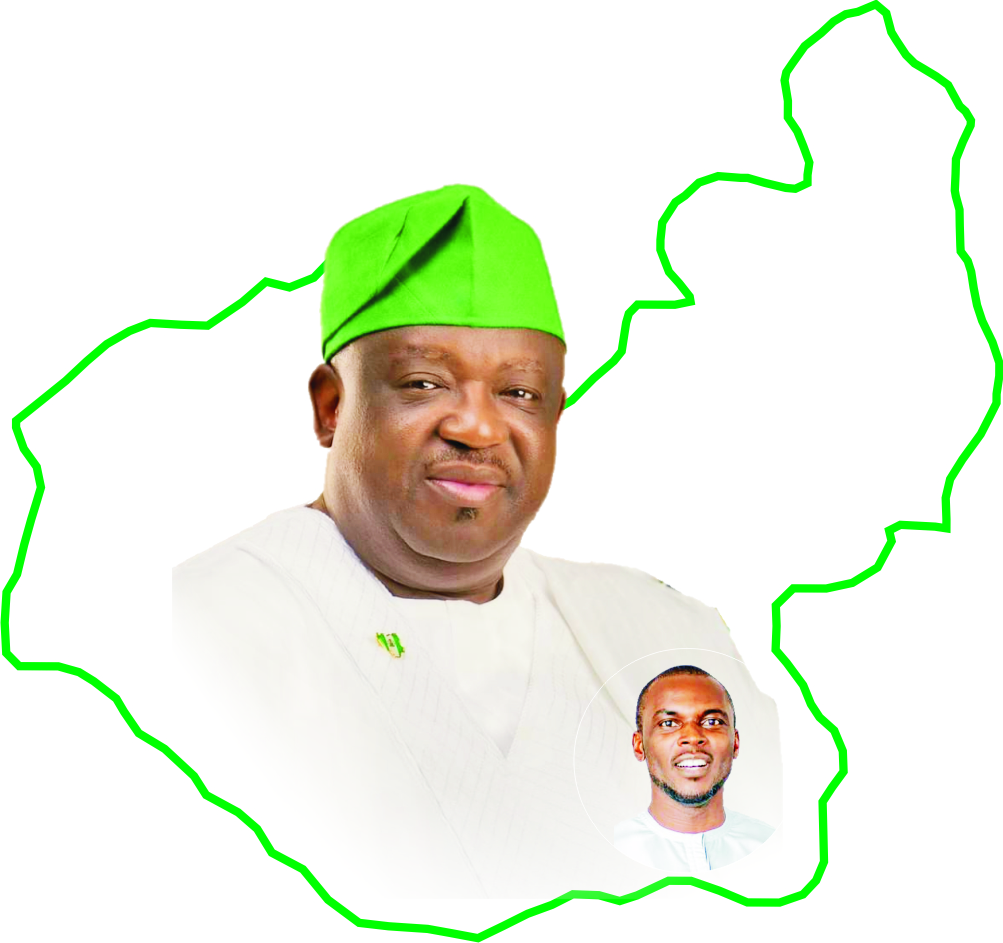

Nuhu Yakubu Chayi. I have a Bsc in Sociology from the Bingham University. I have a diploma in Computer Application. I have a diploma in Social Development. I have a diploma in HIV/AIDS. I attended a number of short courses. Worked in the ICT, caregiver, and counsellor on HIV/AIDS. I worked with Transfer of Appropriate Sustainable Technologies and Expertise (TASTE).
As a Special Adviser to the governor, can you educate the public on your portfolio- Sustainable Technology and Carbon Credit Management?
If you look at the portfolio, it is sustainable technology and carbon credit management. Sustainable technology is a technology that is designed to be friendly to the environment and to the users of that technology. When we say a technology is sustainable. It is something that is not far away from the people. It is something that if you use today, it is available to be used tomorrow, it is available for use in the future. A typical example is for you to think of what a circular economy is. A circular economy is when you produce a product and it comes to the market and it reaches its users and is put to use to generate waste. And the waste that is generated from whatever product is recycled into another product that would provide service. A typical example is the plastic. The most successful technology that is close to sustainability is iron. You hardly see iron waste in the environment that is harmful. It is being collected immediately because there is value attached to it. It means that whatever you use iron for, you an recycle it. By so doing you are sustaining the environment so that the earth crust doesn’t get interrupted continuously and those natural resources are saved for the future generation to use. So any technology that harvest raw materials and then uses it to the fullest without a means of being recycled for future use is robbing the future generation of the benefits of such raw materials. The metals used to produce your cr were metals used to produce bridges many years ago. Again when you look at solar energy, it is renewable energy. We are tapping from nature such huge resource as sun. Now when you talk about carbon credit or carbon financing, it is an emerging market in Africa, but its been there for many years. It is when you ensure that the technology you put to use has direct social impact on the environment and its been put to use. And that social impact can be push further to give you economic benefit. A typical example is when you use solar energy instead of using the national grid. It doesn’t harm the environment as the big grids do. It sustains the people and has social impact. By that you can quantify the energy produced, transferred or consumed that does not impact the environment negatively, then earn money from it. This is basically from the United Nations during one of their conventions (the Paris convention) that the global community came together and agreed that, let’s think sustainably, and act sustainably. And in order to encourage people to think sustainably, act sustainably, a reward system was created. The reward system is the carbon credit. We have the climate change and the impact of climate change- too much CO2 destroys the ozone layer. Sun rays increases, the icebergs melts, the volume of water increases and then flood. At the same time again, environmental degradation, desertification and you see people’s livelihood been threatened. Now, how do we now help ourselves? Some of the activities that we carry out that impacts the environment and results to climate change are necessary products that we need as human beings for survival. But how do you stop or reduce those productions when you need it in order to sustain the environment. Now, nations that sign that Paris agreement agree that we are going to create policies that would limit any technology, any practices that encourage climate change. By so doing, they agreed that a reward system should be created. Therefore, the policy is that for every company, you are allowed to emit a certain amount of carbon. If you exceed that, it is criminal. But then, if they don’t exceed in some cases, they are not able to and they are not able to produce the number of products that the people need, they must meet those needs. So now, some NGO’s and developers now said that, how do we create an environment that would be absorbing the excess carbon being produced by this other companies trying to meet human needs. Then, they will now say we would make sure that there is access to clean and safe drinking water. Then the technology that would be deployed to produce that safe drinking water is a technology that is sustainable. It is a technology that people don’t have to boil water using fuel wood but in terms of harvesting and processing, renewable energy is deployed that water reaches its end users safely. Therefore people in villages don’t have to use fuel wood to purify their water. We rather have wood being used for furniture making than necessarily being burnt. So the technology is very important. It would be processed, assessed and then see whether your product or your developmental action meets the minimum standards that can be considered as carbon credit worth. There are regulatory bodies that that certify your product to be carbon credit worthy or not and then you can earn money from it.
What are some of the programs and policies embarked upon by this government on climate change which is a global issue of interest?
If you look at the present government being led by Governor Caleb Muftwang, you will see that his sustenance of the World Bank projects/ACRESAL, you will see that there is a lot of erosion control by building canals. Currently we are planning on creating a forest. Also, just two weeks ago, I held a program in Miango Rest Home that brought in 129 women as a pilot to introduce climate smart agriculture. Our food production is not mechanized. It is from small farm holders that we aggregate yheir effort to produce food for the nation. But we want to look at this small farmers and test run the idea of climate smart agriculture. So these women were trained on climate smart agriculture, and provided with seed fund to go back and produce food with the climate in mind. There are cultural activities that are attached to farming. We have to tell people that there is an interruption of the season and how to adjust appropriately. Beyond climate smart agriculture, we are looking at organic food production. Now we want to look at compost manure. Eventually we would
Before your appointment as a Special Adviser, you were into water management; what innovative ways are you adopting to tackle the shortage of water in the state?
In barely two weeks’ time, the governor would be celebrating his mid-term in office; what is your assessment of the Muftwang administration with particular emphasis on using technology to achieve the goals of development?
It is the same project that the state is working on to ensure that the citizens of Plateau State have access to clean water, especially in the rural areas. At the same time, in collaboration with TASTE NIGERIA, Plateau State was able to bring back to life nearly 1,000 broken-down hand pumps in seven local government areas.
Before your appointment as a Special Adviser, you were into water management. What innovative ways are you adopting to tackle the problem of water shortage in the state?
Thank you very much for this question. You see, there are many programmes being run within Plateau that have to do with water. Here are two of them:
1. AfDB programme ( being administered by theJos Water Corporation).
2. SURWASH project ( being implemented by PRUWASSA and PLAWASSA).
If you look at the Plateau State Water Sector Law of 2019, it has been categorised into three:
– Rural water.
– Small-town water (municipal water).
– Jos Water Corporation
Let me begin with the Jos Water Corporation, which is under the AfDB. For the first time in the history of Plateau, there is a huge investment in water. But, unfortunately, because this investment was never done before, I was shocked to realise that much of the pumps within the city were from the 1970s.
Of course, there were efforts made during the Jang administration. Some pumps were installed (I think by the Germans or the Chinese), but the technical know-how of our engineers was not up to date to sustain that technology. And there was no knowledge transfer between them and our own engineers. So those pumps kept breaking down. Hence, the water shortage.
So, the old pumps were brought back. Now, there should be technology transfer with the product that you are bringing so that the contract is complete. We don’t have to depend on the contractors to maintain those systems.
Currently, there is a lot of investments in the following areas:
– In Wase, Mangu and Shendam, it is all the same.
– In Jos, you have the Yakubu Gowon Dam, but it will take some time to see results.
– There is a contract on ground to replace these pumps and bring back the pipes that were destroyed due to road construction.
If the past administration had continued with the same contractors, we would have gone past this stage. When you go to PLAWASSA, there are mighty boreholes erected in different locations to provide water. We have restored over a hundred motorised systems where the boreholes are reticulated to different locations, and they are all powered by solar.
At the same time, we are conscious of the fact that individuals are taking the responsibility of providing water for themselves. What technology are they using? Boreholes! And what is the impact of boreholes on the environment? It can cause earth tremors where you have too many of them in close proximity.
So, the state government is pushing for city water in Jos LGA to reduce these actions by individuals. I am sure the Jos Water Corporation will install prepaid meters to households. The Bukuru huge tank that was obsolete has been brought back to life, and I am sure that with adequate power supply, Bukuru residents can get 24-hour water supply. Even within Jos city, it is because of limited power that we have water shortages. That is why the system is being refurbished to ensure water supply.
In barely a week’s time, the governor will be celebrating his mid-term in office. What is your assessment of the Mutfwang administration, with particular emphasis on using technology to achieve developmental goals?
Thank you. This office is barely nine months old compared to the administration, which is about two years. It is because of his desire to see transformation that necessitated this office to be created.
For the fact that he recognised the carbon credit market and created an office in that respect is a big achievement. I am not sure if there is any other state in this country with this office. Some may have offices related to this, but not with this very portfolio.
The investment done by the state government in the carbon credit market is up to N3 billion within eight months, and going forward. During the UN General Assembly sometime last year, the governor signed an MOU with Global Green Development Group — a US and Swiss company — where we can explore a big market for carbon credit beyond what we are expecting.
Over time, we have had good interactions such that we have signed preliminary and public-private partnerships. And in no distant time—maybe in two weeks—the main legal document that has been drafted will be signed. When that is signed, this partnership will bring in nearly $100 million for biofuel production and production of raw materials. And these are tied to just two things: Moringa and Jatropha.
We are targeting 4,000 farmers with a minimum of two hectares of land each. For the Jatropha, we are looking forward to setting up a refinery within one of the agro-processing zones. Along with the African Development Bank, Plateau State government is going to be producing three agro-processing zones in Mangu, Shendam and Barakin-Ladi.
So, with these refineries located in each of the zones, as farmers harvest their Jatropha seeds, they will take them to these refineries to be produced into biofuel. Biofuel is carbon credit-worthy. It would elongate our lives as a people.
With 4,000 direct beneficiaries as farmers, those that are in the value chain are unending. And in the end, we have biofuel that can be blended with fossil fuel to reduce environmental impact. At the same time, the farmers are harvesting, processing, and making money, and we are also creating a carbon register that would earn us money.
So, if this comes to fruition, by the time the governor completes his eight-year tenure, he will remain the governor for the next 100 years. Why? Because the Jatropha trees absorb carbon, all of those farms will be registered in the carbon credit market, and we will be making money. Any vehicle or generator not using carbon, we can register them. You see, we have four different ways of making money just with this product, besides the value chain.
This is a wonderful policy. But we all know that the state is facing a great deal of insecurity challenges, which might affect such fantastic initiatives. How does the government plan to manoeuvre through these challenges to ensure success?
For me, the Federal Government of yesterday and possibly of today is 100 percent responsible for the insecurity bedevilling this country. I will say that the Federal Government has been hijacked by individuals who have their own interests different from the interest of the people, and they are using government machinery to create insecurity in order to meet their own selfish goals.
So if the government would become responsible, especially the Commander-in-Chief of the Armed Forces, Bola Tinub, and clean the armed forces of people who have been planted to promote this agenda, this project will certainly proceed successfully.
It is a problem that is not bigger than us. It is a problem that we are tolerating because we want to exchange it with something that would benefit us personally, especially within political circles. We don’t know that if we allow everybody to thrive, we would benefit better than the personal benefit we would get from the current state of insecurity.
They say the governor is the chief security officer of the state, so also the local government chairman and traditional rulers. But if you look at the constitution, none of them has the power to command the security apparatus of the country. And if I don’t have the power to command the security architecture, how do you then hold me responsible for anything happening within my domain, especially armed people who are more sophisticated than I am?
Nobody has to be suppressed for another person to thrive. Community police, community governance should be deployed on the Plateau for people to survive. I want to thank the president for introducing forest guards, where about 1,200 forests would be manned. We have to take back our forests. One funny thing is that we have always said that those killing Nigerians are not Nigerians. Yet, when we arrest them, we rehabilitate them instead of dealing with them according to the laws of the land.