



By CLEM OLUWOLE
IF the mountain will not come to Mohammed, then Mohammed must go to the mountain. This age-old maxim means that if you cannot get what you want, or the person you need does not come to you, then you must adjust to the situation and go to them.
This aptly describes the recently conceived Citizens’ Engagement Series and Federal Government Projects Tour of the South-East, led by Mohammed Idris in his capacity as the Minister of Information and National Orientation. It would have been practically impossible to move the entire South-East to Abuja to hear from the federal government’s spokesperson. Instead, the minister took the message directly to them, highlighting the achievements of the Renewed Hope Agenda — a train already steaming across the nation and delivering landmark projects previously unimaginable.
In the minister’s delegation were some of the federal government’s communication strategists, including the Special Adviser to the President on Information and Strategy, Mr. Bayo Onanuga; the Director General of the News Agency of Nigeria (NAN), MalamAli M.AIi; the Director General of the National Orientation Agency (NOA), Malam Lanre Issa-Onilu; and the immediate past Director General of the Nigerian Television Authority (NTA), Malam Salihu Abdulhamid Dembos.
Enugu and Ebonyi states hosted the delegation, which engaged citizens, inspected projects and emphasized the government’s central thesis: reforms may come with short-term pain, but they are unlocking long-term gains already visible on the ground.
Enugu: healthcare, education, infrastructure on the rise
When President Bola Ahmed Tinubu unveiled his Renewed Hope Agenda in May 2023, critics dismissed it as an empty slogan. Two years later, however, the South-East is witnessing a transformation that even the most skeptical cannot ignore. From the busy streets of Enugu to the vibrant communities of Ebonyi, federal projects are springing up and restoring confidence that no region will be left behind.
The delegation first berthed in Enugu State, warmly received by Governor Peter Mbah. The International Conference Centre, the venue of the meeting, was filled with eager citizens who listened attentively to the federal team and expressed satisfaction with the progress so far.
Minister Idris painted a vivid picture of how reforms such as fuel subsidy removal and exchange rate unification have freed up billions of naira, now reinvested in infrastructure, healthcare, education, and agriculture. “The South-East is central to our vision for a prosperous Nigeria, and not on the sidelines, “he declared.
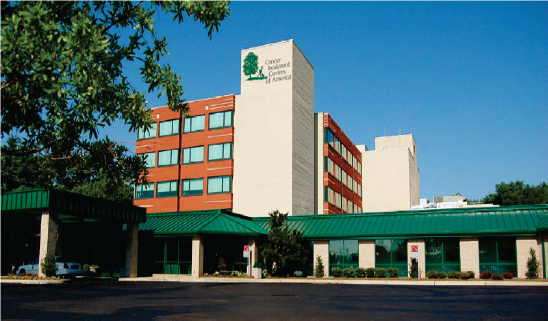
The team inspected key projects including the Federal Oncology and Cancer Treatment Centre in Enugu, a facility equipped with diagnostic and radiotherapy machines previously available only abroad or in Lagos. For cancer patients in the South-East, this centre represents a lifeline.
They also toured Section Three of the Enugu-Port Harcourt Expressway (61 km, N100.8 billion), a dual carriageway under construction that will ease trade and reduce travel time across the region.
State-led projects, such as 7,000 classrooms, 3,300 hospital beds and 2,000-hectare farm estates across 260 wards, further demonstrated the synergy between federal reforms and local initiatives.
Governor Mbah was clear in his acknowledgment: “For us in Enugu, we can accomplish all we promised our people during the campaign; thanks to the bold decision taken by President Bola Tinubu, which has freed up resources needed to execute massive capital projects.”
Ebonyi: unlocking economic arteries
While Enugu showcased healthcare and educational uplift, Ebonyi highlighted the power of infrastructure in opening new economic frontiers. Governor Francis Nwifuru welcomed the delegation with warmth, showcasing both state projects and the benefits of federal interventions.
The highlight was the inspection of the Trans-Saharan Superhighway, particularly the 118-kilometre Calabar-Ebonyi section valued at N445 billion. Constructed with rigid concrete pavement, the highway is set to link the South-East with Calabar, Benue, Nasarawa and Abuja, thus creating a corridor of commerce that connects regions.
At N’dibe Beach, the team inspected a 700-metre, 12-span bridge that will finally end decades of flooding that had cut off communities. Once completed, it will restore access, boost trade and reconnect livelihoods. Other projects included the Enugu-Abakaliki Road and the Civil Servant Reward Estate in
Abakaliki, where houses were handed to outstanding teachers, civil servants and even a young basketball star.
Additional works showcased included the 26.3 km Stadium-Yagashi Road, the 12.8 km Mwipoko-Bodog Road with a three-span bridge and 30 new urban roads in Abakaliki metropolis. These developments demonstrate how resources freed from subsidy removal are reshaping Ebonyi’s infrastructure landscape.
Citizens1 response, the road ahead
Perhaps the most striking element of the tour was the feedback from citizens. Traditional rulers, community leaders and ordinary people expressed gratitude for the federal interventions. At the Enugu town hall, Igwe Samuel Ikechukwu Asadu, Head of the Traditional Rulers Council, declared: “We have no alternative in Aso Rock. President Tinubu is the man.” His words were met with deafening applause.
Despite the temporary hardships of reform, citizens are beginning to see tangible benefits — roads they can drive on, hospitals that can treat them and schools that can educate their children. These are not abstract policies but real changes affecting livelihoods.
The visits underscored a deeper truth: infrastructure is the backbone of the Renewed Hope Agenda. From roads to bridges, cancer centres to classrooms, the federal government is laying a foundation for long-term growth. Each project is an investment in human capital, commerce and equity.
Another significant takeaway is the growing partnership between the federal government and South-East governors. Both Mbah in Enugu and Nwifuru in Ebonyi admitted that their states’ achievements were made possible by federal reforms. Their complementary state initiatives amplify the federal investments, creating a model of cooperative governance that Nigeria needs.
As the Citizens’ Engagement Series wrapped up in Ebonyi, one message stood tall: the South-East is not on the margins of Nigeria’s development but at the heart of it. Through bold reforms and massive infrastructure rollout, the Tinubu administration is proving that equitable development is not a slogan but a reality.
Yes, the road to reform is bumpy, but if the testimonies from Enugu and Ebonyi are anything to go by, the people are beginning to see the light at the end of the tunnel. The Renewed Hope Agenda is not just a promise but a plan in motion. And as Igwe Asadu declared in Enugu, echoing the sentiment of many in the South-East: “President Tinubu is the man.”
Oluwole writes from Abuja via clemoluwole@gmail.com