


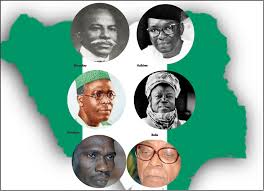

Today, I celebrate my beloved Motherland, Nigeria, born in 1960 through the labour of our heroes past, that is, the nationalists who were driven by love for their fatherland and a burning desire for freedom.
It was such a beautiful child, so promising, that her parents, the British, did not want to let go. But the insistence of the nationalists prevailed. Like the Biblical Moses, Nigeria was founded out of water, River Niger. Her foster parents took an interest in her, picked her up and cared for her. They opened her eyes to the beauty of freedom. But while she blossomed under them, they also ravaged and plundered her, taking all they desired.
Sadly, no part of her natural endowment was spared. They knew her through and through, and she was left with every reason to cry out: “Let my people go!”
This relationship was never symbiotic. One benefitted more, the other was exploited. One lorded it over the other, while the weaker one submitted in absolute obedience. They gave her the Bible. But in return they took the best of her land. They offered books in exchange for her service in their land. Then she realised that she was nothing but a means to an end — even as she laboured under the yoke of colonialism, in direct contradiction of the very Bible they preached. Where, then, was the love?
It is little wonder that it is widely alleged (and ardently believed in certain quarters), that the colonial masters underdeveloped Africa. In Nigeria, records show that this underdevelopment was in the form of resource extraction. Here, the colonial powers exploited Nigeria’s natural resources, including palm oil, cotton and rubber, for their own economic gain. Colonial rule also destabilised traditional systems and stripped away economic autonomy and self-sufficiency of indigenous peoples.
Furthermore, the colonial powers made selective investments in infrastructure, but only to facilitate extraction and transportation of resources, not to benefit local communities.
Education, too, was limited. It was designed for a small elite, leaving most without access to quality learning and restricting the growth of a skilled workforce. Still, the few who benefitted rose to become the ‘Moses’ who cried out “Let my people go!” Thus, on October 1, 1960, independence was achieved.
Colonial rule imposed European languages, values and customs, suppressing local cultures and traditions. To this day, Nigerians bear the consequences as a Eurocentric mindset dominates our way of life. We refer to our traditional attires as “local” or “native”, while European wear is seen as formal and superior. Banks, for example, permit native wear only on Fridays.
The same is true of food. Indigenous dishes such as egusi and eba are called “local”, while rice and Irish potatoes — once foreign to us — have become household staples.
We bleach our skin to appear fairer rather than celebrating our natural chocolate complexion. Natural afros are dismissed as “local”, while millions are spent on imported weave-ons. Nigerian names rich with meaning are abandoned for European oned that we cannot even pronounce properly. Thus, Yvonne becomes Younne or Evon, Mitchel is split into Mit-Chel and James is distorted into Ja-mis. Colonialism dismantled our social structures, leaving cultural dislocation that persists.
The colonial order built dependence, not resilience. Nigeria’s economy became structured around foreign aid and investment rather than self-sufficiency. With each passing day, our debts grow heavier, tarnishing our global image.
Institutions left behind were weak and incapable of delivering effective governance. Their fragility remains a stumbling block to our development trajectory.
To move forward, we must understand and confront these historical burdens. Nigeria urgently needs cultural reorientation. We must appreciate who we are, value what we have and protect our endowments. Until we do, the world will not respect us. And if nothing is done, we risk raising a generation stripped of identity and cultural values — a people adrift.
Therefore, parents hold a crucial responsibility in this respect. They must teach children our local languages, introduce them to our traditional dishes and instil pride in them the our dress and customs. By nurturing our cultural values at home, we can restore pride in our heritage.
One effective path is through storytelling. This can be done through introducing our youth to authentic Nigerian films and rich Nigerian literature. These are powerful tools to reawaken cultural consciousness.
We must act now. The longer we delay, the further we drift from who we truly are.