



By NICK DAZANG
In 2003, under the watch of former President Olusegun Obasanjo, the World Values Survey declared Nigeria as home to the world’s happiest people. By 2024, however, Nigeria had plummeted from this enviable and shimmering position to 104th in the happiness index.
In spite of this precipitous plunge to the nadir of happiness – and for obvious reasons – tribute must be paid to the forbearance and fortitude of Nigerians. For in spite of difficulties, equating, if not surpassing, those of such basket cases as Nepal and Bangladesh, Nigerians have carried on with uncommon perseverance and long-suffering.
By the same token, homage must be paid to the can-do and never-say-die spirit of the Nigerian. This spirit is epitomised and exemplified by the tendency of the Nigerian, against the odds, to fend for himself in nearly all facets of life. Where governments – federal, state and local – are hopelessly derelict in providing such basic infrastructure and amenities as roads, water, electricity, schools and hospitals, Nigerians, especially the better-heeled, are forthcoming. They have weighed in, thereby filling these lacunae.
Most Nigerians provide access roads to their estates, streets and households. They drill their own boreholes. They invest in private schools (crèche, primary and tertiary). They invest in solar panels to make up for the shortcomings of our electricity generation and distribution companies (GENCOs and DISCOs), whose acronyms do not suggest or convey any seriousness or sense of purpose.
If homage is paid to Nigerians for providing for themselves where their governments have failed, woefully and spectacularly, tribute must also be paid to their sense of enterprise and industry. Drawing from a proud work ethic that celebrates and lionises persons who fend for themselves and others rather than relying on handouts, most Nigerians have found recourse in one enterprise or another. This has led to a proliferation of small and medium-sized enterprises (SMEs) across the country.
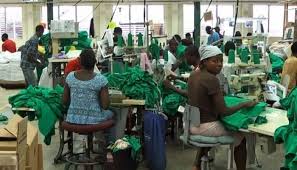
Referred to in economic parlance as the informal sector, small businesses employ more Nigerians than any other, apart from agriculture, which hitherto led the way until the advent of oil. In spite of the behemoth known as the Organised Private Sector (OPS), the informal sector of the economy has co-opted many of our youths, who ordinarily would have been idling away or constituting a menace on our streets. This has kept millions of our youths gainfully employed. It has also imbued them with genuine hope.
Power, transport, rising costs
Yet, even this sector, arising from the vagaries of government policies and predilections, is receiving one of its severest buffetings. This writer’s survey of a number of small businesses in the Federal Capital Territory (FCT) and four states adjoining it suggests that they are facing a number of existential and life-threatening headwinds.
Power, or electricity, is one of the major challenges. Sometimes, for nearly a week, electricity is not supplied by the DISCOs covering these states and the FCT, to the chagrin of businesses. About a week ago, nearly all districts of the FCT went without electricity for five days. It was the same in neighbouring Niger State. Kaduna was worse: it went without electricity for seven days, throwing the state back to the Stone Age.
In the absence of electricity, most businesses in these states and the FCT have had to rely on generators, thus incurring additional costs. And since they are located in what are referred to as civil service states, being bereft of industries, they run on losses. They can hardly pass on these costs to their customers, who are smarting under cost-of-living crises and whose disposable incomes have shrunk to near zero.
Transportation is another challenge. Following the withdrawal of fuel subsidy, the cost of transportation has quadrupled. In most cases, workers do not reside close to their places of employment. In Abuja, this situation is worse: not less than ninety percent of workers reside in suburbs and outskirts outside the city centre. This has compelled employers to increase salaries marginally, to downsize, or to devise a curious roster in which staff come to work three times a week and in rotation. These, of course, have consequences for morale and joblessness.
In one hotel at Wuse II, investigations show that most of the staff have been laid off due to the hard times. Staff are invited to work only on a need basis and when the hotel records a high volume of room bookings. However, whether there are guests or not, the hotel must run its generators daily to secure the premises, present a semblance of activity, and preserve the foodstuffs it has stocked in its refrigerators.
Burden of multiple taxation
Further compounding the contrivance of an intriguing working roster for staff or finding recourse in casuals, which offends labour practices, are multiple taxations imposed, roughshod, by federal, state and local governments. In nearly all these states and the FCT, demand notices for ground rents are issued by the state and local governments simultaneously. All manner of taxes are also demanded. Worst of all, they are usually issued cavalierly and with sadistic relish. It is as if the businessperson has committed an offence for daring to venture out or to invest.
These obnoxious multiple taxations and other vexatious charges have reared their ugly heads in recent times. They have arisen out of a frenzied quest for Internally Generated Revenue (IGR). It is healthy for states to generate revenue and to rely less on statutory monthly federal allocations. But the haughty manner in which taxes are imposed, and the sadistic manner in which they are exacted, go beyond the pale.
It hardly encourages the small businessperson to venture out or to invest, thereby creating jobs in the process. Neither have we seen, apart from white elephant flyovers being constructed in state capitals, any concerted efforts by state governments to address our infrastructure deficit or the provision of amenities.
A call for reform, support
This writer has elected to regale the reader with these plangent and woeful tales in order to call attention to the havoc governments, especially state and local, are wreaking on businesses, and the urgent need for tax reform to streamline and harmonise taxes across the three tiers of government.
The fears of the small businessperson must not only be assuaged; an environment must be created for him or her to thrive. Otherwise, rather than grow, the economy will remain in its doldrums with negative consequences.
The continuously lower contribution of the manufacturing sector to Nominal Gross Domestic Product (GDP) should instruct us. By the recent accounting of the National Bureau of Statistics (NBS), the contribution of the manufacturing sector to Nominal GDP in the second quarter of 2025 was 6.87%, lower than the figure recorded in the corresponding period of 2024 at 7.84% and, for good measure, lower than the first quarter of 2025, which was 10.78%.
We do not have any figures relating to the growth rate of the informal sector. But your guess is as good as mine!
Dazang, a retired Director of Voter Education and Publicity of the Independent National Electoral Commission, INEC, wrote from Abuja via nickdazang@gmail.com