



By SELE VICTOR
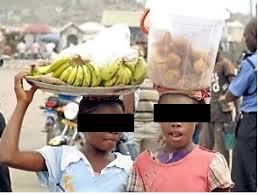
The growing menace of child hawking in Northern Nigeria has become an alarming social issue that calls for urgent intervention. In cities such as Kano, Kaduna and Jos, it is now a common sight to see children as young as seven years old running after vehicles and pedestrians, selling goods or begging for food and money.
While their peers sit in classrooms, these young ones are exposed daily to exploitation, harsh weather and the dangers of street life.
One of such children is Promise Victor, a young girl who hawks bread and groundnuts in traffic. She has never attended school and does this to support her polygamous family.
Similarly, a young boy who sells sugar cane with a wheelbarrow confessed that he missed the opportunity of schooling due to ignorance and poverty. He now regrets the decision but feels trapped by the burden of family responsibility.
Their stories mirror the painful reality faced by many children across the North.
At the heart of this crisis lies the cycle of poverty. Many families are so financially constrained that they depend on their children’s earnings to survive.
This economic desperation forces thousands of children into the streets, trading education for survival. The result is a generation growing up without literacy, skills or protection from abuse.
These children endure long hours under scorching sun or heavy rain, inhaling fumes, and navigating dangerous traffic — all in the struggle to make ends meet.
While the Nigerian government has acknowledged the problem of child labour, its response has been far from adequate. Policies are poorly enforced, and intervention programmes rarely reach those in dire need.
Non-governmental organisations (NGOs) have tried to bridge the gap by providing education, vocational training and welfare services. But their efforts are only a drop in the ocean compared to the magnitude of the problem.
Therefore, this tragic situation demands urgent and collective action. Government must prioritise investment in education, poverty alleviation and social welfare programmes. Community leaders and religious institutions should promote awareness about the value of education and the dangers of child exploitation. Likewise, enforcement agencies must uphold child protection laws and prosecute offenders who exploit minors for profit.
The future of Northern Nigeria depends on how society treats its children today. Every child hawking on the streets is a potential doctor, teacher or leader lost to neglect.
It is time for all stakeholders — government, civil society and communities — to unite in giving these children the chance to learn, live safely and dream again.