


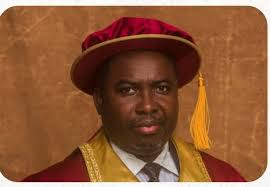

In this insightful piece, SARAH BULUS examines the appointment of Professor Joash Ojo Amupitan (SAN) as the new Chairman of the Independent National Electoral Commission (INEC), analysing the expectations, challenges and public perceptions surrounding his emergence. As Nigeria prepares for the 2027 general elections, the article probes whether Amupitan’s leadership can restore faith in INEC, strengthen electoral integrity and usher in a new era of credible democracy in the country
As Nigeria edges closer to the 2027 general elections, the political atmosphere is once again charged with debate over the leadership of the Independent National Electoral Commission (INEC). The appointment of Professor Joash Ojo Amupitan (SAN) by President Bola Tinubu, and his subsequent confirmation by the Senate on Thursday, October 16, has sparked a mixture of optimism, scepticism and cautious hope among Nigerians. The pressing question remains: can Amupitan restore public confidence in INEC and deliver credible, transparent elections?
A scholar with integrity at a critical time
Professor Amupitan, a Senior Advocate of Nigeria (SAN) and former Dean of Law at the University of Jos, commands respect for his deep understanding of constitutional and electoral law. His appointment comes at a sensitive period when the credibility of Nigeria’s electoral body remains fragile following the controversies surrounding the 2023 general elections.
Many Nigerians believe Amupitan’s academic and professional credentials make him well-suited to usher in a new era of electoral reform. They point to his reputation for integrity and his extensive legal background as strengths that could guide INEC toward transparency and accountability.
However, as Sylvester Udemezue of the Council of Legal Education (Nigeria Law School) noted, “It is not about whether Professor Amupitan can perform well, but whether he will, and that can only be proven through the crucible of actual governance.”
Capacity alone, he argued, does not guarantee credible elections. True success requires resilience, independence and the courage to resist political pressure and uphold the law in the face of inducements.
A resident of Angwan Rukuba in Jos, the Plateau State capital, Mr Sunday Bunu shared his optimism: “For me, the new INEC Chairman is okay, but if he can work on the card reader problem I will be happy,” he said.
However, another resident, Mrs Esther Daniel, expressed her concerns more cautiously: “I hope all the wahala that we have been experiencing will not repeat itself again, like some people who are not of age use to vote and some even vote two times,” she said.
Challenge of technology, transparency
For many Nigerians, Amupitan’s greatest test lies in how he manages INEC’s technology systems and transparency mechanisms. After the controversies surrounding the INEC Result Viewing (IReV) portal in 2023, the public expects him to restore confidence in electronic transmission and accreditation systems such as the BVAS (Bimodal Voter Accreditation System).
Mr Innocent Bitrus, also in Jos, suggested:
“There should be alternatives when it comes to transparency in the elections, especially in remote villages and places where power supply is very poor or not available. There should be extra batteries for the machines and generators provided by INEC in case of power failure.”
Similarly, Miss Hannatu Ashoms emphasised the need for reliable internet connectivity. “Sending results from the polling units to the INEC reviewing portal requires internet connectivity. The government should ensure that even the villages are connected to the global space,” she said.
Political analyst Dr Grace Eze added, “Technology alone cannot save our elections. It must be backed by integrity, transparency, and a genuine commitment to accountability.”
For INEC, this means consistent evidence of verification in result transmission, improved voter education and openness in its internal operations.
Independence, the road ahead
Perhaps the most pressing concern is INEC’s independence. Many Nigerians fear that the commission’s neutrality has often been compromised by political interference. Some critics have questioned Amupitan’s perceived closeness to the current administration, warning that it could threaten his ability to act impartially.
Nevertheless, civil society organisations such as the Transition Monitoring Group (TMG) and Yiaga Africa have expressed cautious optimism. They describe Amupitan as a reform-minded scholar who understands the legal framework of elections. To them, the real task ahead is not just about leadership but about the ability to withstand pressure and uphold democratic principles.
From civil society to the grassroots, Nigerians are watching closely. They expect Amupitan to champion bold reforms, review the Electoral Act, enforce campaign finance regulations and tackle challenges such as vote-buying and electoral violence.
As 2027 draws near, expectations are high and the stakes even higher. INEC’s credibility is not merely an institutional issue — it is the foundation upon which Nigeria’s democracy stands. Professor Amupitan inherits an institution in dire need of reform, a citizenry yearning for trust and a democracy that must be defended.
In the final analysis, the credibility of Nigeria’s next election will not depend solely on technology or policy but on leadership, integrity, and courage. Nigerians are waiting to see whether Professor Joash Ojo Amupitan will truly deliver a vote of confidence — or whether history will, once again, repeat itself.