




Nigeria has indeed come a long way. We are moving forward, and we are making progress. Anyone who claims that Nigeria is not making progress does not speak the truth. Many of us were born at a time when the country largely depended on developed nations for simple essentials like sugar, rice, milk and beverages. Growing up, we could hardly imagine that anything good, reliable or durable could emerge from Nigeria.
From mockery to mastery
We used to refer to locally made items as ‘Made in Aba’. To Nigerians then, it was shorthand for poor quality. Yet Aba has always been home to brilliant and creative minds. But instead of encouraging them, we mocked their efforts. Because we saw little value in what was ours, their products were bought only by the poorest who could not afford better alternatives.
The story is told of a couple who had to patronise Aba-made shoes for their wedding due to financial constraints. Everything went smoothly until the moment they danced into the reception arena. The bride danced happily until she realised that one foot suddenly felt lighter while the other felt strangely loose. She paused, lifted her wedding gown, and burst into tears when she saw what had happened. The upper part of the shoe was still attached to her leg while the heel had detached itself and dropped to the ground. Most parts of the other shoe had come off but clung stubbornly to the heel.
The incident almost ruined the reception. Some guests found it amusing, while others sympathised deeply. One of the latter kindly gave the bride the shoes she was wearing so the event could continue.
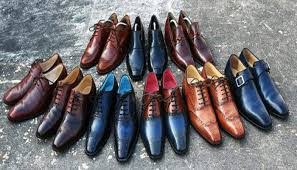
That was three decades ago. Today, the story has changed. Aba-made shoes have today transformed into durable, stylish footwear worn by women of all ages, including market women who comfortably go about their daily business in them. Across the country, youth now travel to Aba to learn shoemaking, and many are earning a living from it. They specialise in sandals worn by secondary school students, slippers paired with native attire and even covered shoes fit for corporate wear.
They must be making money for such shops to flourish. Along Topp, Rayfield, and down to Shinco Road, all in Jos, there are about five thriving shoemaking workshops, each with at least three apprentices. Business is clearly good.
Recently, we have seen even more creative handmade designs entering the market. Government can understudy China’s model to understand how it empowers local companies and creates a conducive environment for their growth.
Rise of local production
Are you aware that more than half of Nigeria’s male population now buy and proudly wear locally made boxers? The products are strong, affordable and up to standard. A walk from Terminus down to the former Jos University Teaching Hospital, JUTH, reveals young women and boys working tirelessly in their shops, sewing boxers with admirable dedication.
Another group specialises in making bedsheets and curtains. They sell the materials, allow you to choose your pattern, and sew your bedsheets and curtains while you wait—simply tell them the dimensions.
There was a time Nigerians never trusted anything made locally. Fortunately, that perception is gradually fading. Today, we have seen and tasted home-grown goods like Nigerian rice—de-stoned and well packaged. We have seen high-quality sugar, spaghetti, flour and corn flour from Dangote, BUA and others competing favourably with foreign alternatives.
For many, farming once seemed unprofitable, but that belief is collapsing. My half-brother, who relocated to the village due to unemployment, built a beautiful modern flat in the village from the proceeds of rice sales. He used to say there was nothing to gain from farming—until the house he built exposed the truth.
Therefore, it would not be out of place for government to properly identify farmers who truly need grants and empower them. More youth can be attracted to farming if the sector becomes appealing through affordable tractors and easier access to inputs.
Youth creativity, the new economy
Artisans abound across Nigeria. But many lack the finances to expand their work. Government can intervene with grants and further training to improve their craft. If government shows interest, more youth will certainly embrace these skills, reducing the number of graduates left idle in the labour market.
It is impressive how versatile Nigerian youth have become. It is no longer about what they studied in the university but what brings food to the table. Young women are now remote workers, juggling online jobs with small chops businesses, part-time make-up artistry, hairstyling and more. Boys are not left out as no holiday is wasted. They take up part-time jobs as Jumia agents or workers for other online stores or any job that keeps them productive and able to meet their needs.
No discussion on local creativity is complete without acknowledging the ingenuity of tailors designing and sewing made-in-Nigeria gowns for young girls and children. These clothes are proudly worn, and they look beautiful on the wearers. There was a time Nigerians preferred second-hand clothes over made-in-Nigeria garments. But that trend has drastically changed for good. Thus, benefiting both our creative minds and the economy.
Apparently, not everything good in Nigeria gets reported. It is not all about cybercrimes and vices. There is progress—steady, visible and worthy of acknowledgment.