



By DANBABA TIMOTHY
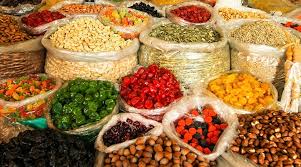
Relief at dinner tables across Nigeria is turning to alarm in farmlands as staple food prices crash by up to 50%, squeezing smallholder farmers who drove the bumper harvests.
While households cheer cheaper rice and maize, producers in Benue, Kaduna and Oyo states are drowning in debt, with high fertilizer bills threatening to wipe out next season’s planting.
The National Bureau of Statistics (NBS) reports food inflation plunged to 16.87% in September 2025—down from 37.77% last year—fueled by record wet-season yields.
Maize, rice and sorghum prices have nosedived over 50% nationally, with a 50kg bag of rice now fetching ₦45,000 (down from ₦90,000) and garri dipping to ₦2,000 per paint bucket.
Tomatoes in Lagos markets have seen a 70% drop, from ₦120,000 to ₦35,000 per big basket.
Agriculture Minister, Sen. Abubakar Kyari, hailed the trend at the 47th National Council on Agriculture and Food Security in Kaduna:
“Targeted interventions like the National Agricultural Growth Scheme-Agro-Pocket (NAGS-AP) boosted wheat from 15 states to nationwide coverage, stabilizing supply,” he said.
Urban traders in Abuja’s Nyanya and Orange Markets confirm the glut.
“Peppers and yams are flooding in—families can eat three square meals without breaking the bank,” says vendor Aisha Ibrahim.
But for the 80% of Nigeria’s farmers who are smallholders tilling under 2 hectares, this ‘relief’ is a curse.
“We grew the food that’s now dirt cheap, but fertilizer ate our profits,” laments Phillip Akuso, a maize farmer in Bwari, FCT.
A 50kg bag of NPK 15:15:15 now costs ₦43,000—up 18% from last year—while urea hits ₦40,000, driven by fuel hikes and import duties.
Fertilizer imports surged 33% in 2024 to meet demand, but retail prices remain unaffordable for most, with consumption stuck at 1.86 million metric tons—far below the 5 million needed for optimal yields.
Experts blame raw material shortages (ammonia, potash) and logistics woes, exacerbated by naira devaluation and insecurity, which add ₦5,000–₦50,000 per transport trip.
In Kwara State, farmer Yakubu Danjuma says: “A 2-hectare plot needs 20 bags—₦800,000 total. At current maize prices, I barely break even. Many are switching to low-fertilizer crops like soybeans.”
The irony stings: Government subsidies via NAGS-AP delivered inputs to 2 million farmers this season, but experts warn that without scaling up, the 2026 wet season could see yields drop 20–30%, reigniting inflation.
Purdue economist, Ifeanyi Obinefo, speaking at the 2025 AAEA conference, warned: “Skyrocketing fertilizers plus climate shocks like erratic rains in the Sahel are pushing 33 million Nigerians toward food insecurity.”
Farmers’ unions like the All Farmers Association of Nigeria (AFAN) are mobilizing. “We need immediate subsidies on blending plants and community silos to cut post-harvest losses,” demands AFAN’s Samuel Eze.
Without action, the very hands feeding Nigeria risk starvation.
FG, states and the private sector must subsidize fertilizer now, fund local blending plants, enforce anti-smuggling raids and roll out credit for 5 million smallholders.