



The Institute for Peace and Conflict Resolution (IPCR), under the Ministry of Foreign Affairs, has called on the Nigeria Union of Journalists (NUJ), Plateau State Council, and university scholars to support Contemporary World Magazine through content development, research contributions and scholarly exchange.
The appeal was made during a one-day dialogue held recently in Jos, aimed at strengthening Africa–China research collaboration. The forum, which drew stakeholders from academia, government, the media, and peacebuilding institutions, explored ways of deepening the magazine’s reach and intellectual value.
The dialogue, themed “Advancing Knowledge Exchange: Bridging Africa–China Dialogue Through Scholarly Exchange,” was held on November 18, 2025, at the Office of Research and Development, University of Jos. It also featured the presentation of the Contemporary World Nigeria magazine (2022–2025 edition).
In his welcome address, the Director General of IPCR, Dr. Joseph Ochogwu, represented by Dr. Sunday Daji, described the meeting as both “significant and timely,” noting that it forms part of the institute’s ongoing effort to scale the magazine across Africa. He recalled that earlier editions of the dialogue were held in Abuja and Lagos in June and August, attracting diplomats, policymakers, academics and journalists.
“The relationship between Nigeria, Africa and China is one of the most consequential of the 21st century,” he said. “Beyond trade figures and infrastructure, it requires deep mutual learning, understanding and scholarly exchange.”
He emphasised the central role of scholars and the media in improving the magazine’s quality and visibility:
“Academia provides the intellectual rigour needed to unpack complexities and generate evidence-based solutions. The media, on the other hand, amplifies these insights to policymakers, research institutes, think tanks, business leaders and the wider public.”
He added that the initiative aligns with President Bola Ahmed Tinubu’s 4Ds Policy Doctrine—Democracy, Development, Demography and Diaspora—under the Renewed Hope Agenda.
Delivering the keynote lecture, Professor Sharkdam Wapmuk of the Nigerian Defence Academy warned that Africa risks remaining a passive actor in global affairs if it fails to build its research capacity and academic diplomacy.
According to him, Nigerians’ reluctance to embrace Mandarin is counterproductive in a world where China’s global influence continues to rise. “If tomorrow negotiations begin in Chinese, how will we respond if we cannot understand or speak the language?” he asked.
He welcomed the government’s approval of Mandarin in public schools but stressed the need for proper implementation, including the training of qualified teachers.
The Plateau State Commissioner for Information and Communication, Rt. Hon. Joyce Ramnap, represented by Permanent Secretary Mr. Nanman Jonah, underscored the importance of strong institutions, digital infrastructure and secure learning environments in driving international cooperation. She noted that the state is upgrading ICT systems and access to information to support research, scholarship and media practice.
Presenting the magazine, the Coordinator of the Editorial Team, Dr. Olalekan Babatunde, said the publication provides African perspectives on international relations, global governance, technology, development models and Africa–China engagement. He noted that the magazine is multilingual and offers honoraria to contributors, creating opportunities for Nigerian scholars to amplify their research globally.
He urged African researchers to question external stereotypes and strengthen knowledge production grounded in local realities.
“When people complain about low-quality Chinese products, they forget our role in demanding cheaper alternatives,” he said, calling for stronger regulatory oversight by agencies such as SON and NAFDAC.
A panel of scholars, including Dr. Luka Dinshak of the University of Jos, Dr. Manko Rose Rindap of Plateau State University, Dr. Wenshak Alheri Danfulani and gender expert Dr. Plangsat Dayil, stressed the need for Africa to transition from defensive posturing to strategic positioning in its engagement with China. They called for strong research institutions, deeper study of China’s development model and alignment with Africa’s Agenda 2063.
Dr. Dayil, in her submission, highlighted China’s economic vibrancy and persistence in promoting its interests through chambers of commerce and trade fairs. She called for greater inclusion of women—especially at the grassroots—into economic programmes, scholarship schemes and exchange initiatives.
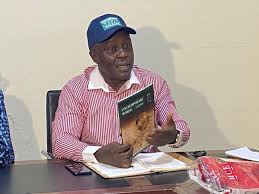
As part of efforts to strengthen media partnership, the Contemporary World Magazine team paid a courtesy visit to the NUJ Plateau State Council on November 19, where copies of the magazine were presented.
During the visit, Dr. Olalekan Babatunde, Head of IPCR’s Directorate of External Conflict Prevention and Resolution, emphasised the critical role of the media in research dissemination and peacebuilding.
“We value the media as strategic partners. Journalists help move academic knowledge beyond the library into public consciousness,” he said.
He encouraged journalists to submit articles for future editions, noting that the magazine pays honoraria for quality contributions.
Responding on behalf of the NUJ Chairman, Deputy Chairman Mr. Pam welcomed the delegation and commended IPCR for recognising the importance of journalists in shaping public understanding of research and policy.
“We will study the magazine and report its contents diligently,” he said, assuring continued support from Plateau journalists—many of whom attended the earlier seminar at the University of Jos.