


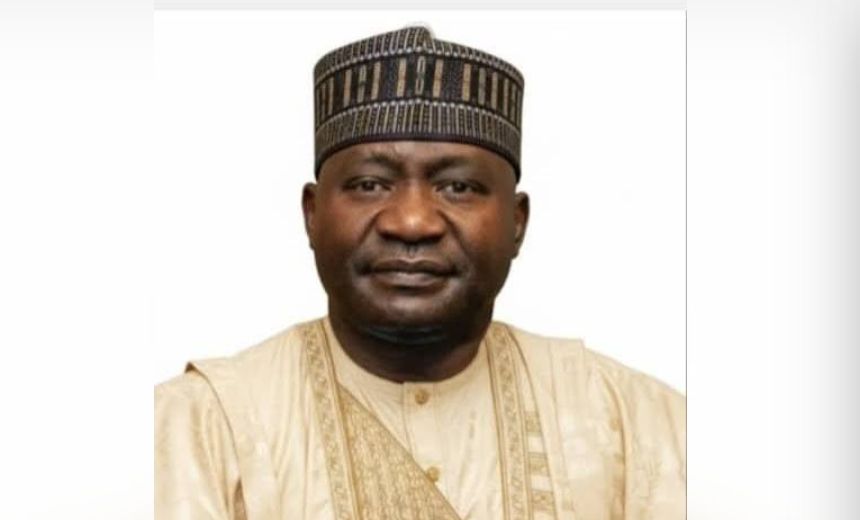

GUEST WRITER
BY DAN MANJANG
Nigeria stands today at one of the most precarious security junctures in its post-independence history. From the western coastline of Lagos to the northeastern fringes of Lake Chad, from the Middle Belt farmlands to the forests of Zamfara and across the southern oil corridors, the country is besieged by multiple layers of insecurity. Banditry, insurgency, separatist agitations, crude-oil theft, cattle rustling, rural terrorism, kidnapping-for-ransom and the silent but deadly proliferation of illegal arms have converged into a national crisis of frightening proportions.
It is against this background that Lieutenant General Christopher Musa (rtd.) will soon assume office as Nigeria’s Minister of Defence. His appointment is not merely another item on the roster of federal cabinet positions—it is a direct summons to rescue the soul of a nation. The task before him is not ceremonial; it is existential. Nigeria is bleeding, and the Defence Ministry must become the theatre of urgent national salvation.
A country under seige
For too long, Nigeria has managed insecurity with a dangerous mixture of complacency, bureaucratic inertia and political lip service. Citizens have become accustomed to headlines of mass kidnappings, entire communities sacked by heavily armed invaders, convoys ambushed, farms abandoned and highways turned into war zones. The national psyche is fatigued. Investors are alarmed. Farmers are fleeing. Families live in perpetual fear.
The new minister must recognise that he is assuming leadership at a time when the patience of Nigerians is completely exhausted. This is not the era for cosmetic reforms or press-statement security. Nigeria does not need another defensive minister—it needs a Defence Minister; one who sees insecurity as warfare against the existence of the nation.
One of the most glaring defects in Nigeria’s security architecture is the lack of synergy among the armed forces, intelligence units and paramilitary agencies. Operations overlap. Communication breaks down. Agencies work in silos. Rivalries weaken national objectives.
General Musa must dismantle this lethargy. He must champion a unified command structure where intelligence flows seamlessly, operations are synchronized and field commanders are empowered but accountable. The era of firefighting approaches must give way to strategic, intelligence-driven, technology-supported warfare.
He must also strengthen the Defence Headquarters’ capacity to coordinate operations across multiple theatres, ensuring that no service arrogates supremacy over others. Nigeria must move from reaction to prevention; from scattered operations to integrated strategy.
Degrading terrorism beyond symbolic victories
A disturbing trend in Nigeria’s counterterrorism efforts has been the tendency to celebrate isolated victories while insurgents regroup elsewhere. Communities once liberated slip back into the hands of terrorists. Bandits negotiate from positions of strength.
General Musa must break this cycle. He must insist on persistent pressure, border control and sustained degradation of criminal networks—not episodic battles. The security agencies must choke the supply of weapons, finances, informants, fuel and logistics that empower these outlaw groups. Without cutting off these arteries, the body of terrorism remains alive.
The minister must also ensure that the Armed Forces re-establish a permanent presence in vulnerable zones through Forward Operating Bases, rapid response units and intelligence surveillance systems. When criminals know they are constantly being observed and can be engaged at any moment, their operational confidence collapses.
The world has moved. Drone warfare, satellite reconnaissance, thermal imaging, electronic interception, geospatial intelligence and AI-driven predictive policing now define modern defence management. Nigeria cannot continue relying on outdated weapons and manual processes while facing enemies who operate with sophisticated communication networks, drone surveillance and international arms suppliers.
General Musa must lead a revolution in defence procurement—transparent, corruption-proof, needs-driven and future-focused.
Every naira must translate into firepower, mobility, training and morale.
Similarly, the Ministry must build a robust technology partnership framework with defence innovators, private security tech firms and global intelligence partners. Security today is hybrid; it is digital, psychological, and kinetic. Nigeria must not remain stuck in analogue warfare while facing digital-age enemies.
Resetting military-civil relations, rebuilding trust
The Nigerian military, once revered as the pride of the nation, has witnessed eroding public trust due to corruption allegations, human-rights violations and avoidable operational lapses. General Musa must reset this relationship.
He must institutionalize strict accountability for officer conduct, ensure that troops engage civilians with professionalism and restore the military’s honour through transparency and justice. Nigerians must once again see soldiers as protectors.
He must also improve military welfare—housing, casualty insurance, medical support, equipment and training. A demoralised soldier cannot defend a nation. Low morale fuels internal sabotage, desertion, indiscipline and operational fatigue.
Nigeria’s enemies thrive because they often know more about the security forces than the security forces know about them. Intelligence failures have cost the nation thousands of innocent lives.
General Musa must overhaul the Defence Intelligence Agency, strengthen inter-agency intelligence fusion, rid the system of moles, enhance surveillance and decentralize intelligence gathering to empower battalion-level units.
Bandits and terrorists live in communities. Someone knows them. Someone supplies them. Someone hides them. Intelligence must penetrate these networks and dismantle them from within.
Nigeria is flooded with illicit weapons—small arms. These weapons are the oxygen of Nigeria’s insecurity.
The Defence Minister must work with Customs, Immigration, Interpol, ECOWAS and border communities to aggressively intercept these arms. He must also regulate private armouries, disarm criminal gangs, and mount continuous mop-up operations.
Without addressing arms proliferation, insecurity will remain a profitable enterprise for criminals.
Defence minister must be a nationalist, not regional loyalist
General Musa must resist the pressures of sectional expectations, political patronage and ethnic sentiments. He must stand as a Minister of Nigeria, not of any geopolitical zone. The Armed Forces are the most visible symbol of national unity; their leadership must reflect national cohesion, not sectional bias.
He must ensure fair deployment of personnel, equitable distribution of military formations and merit-driven appointments in line with professionalism. No region should feel militarily abandoned and no region should feel militarily favoured.
Nigeria cannot achieve food security if farmers remain under constant threat. The Defence Ministry must partner with the ministries of agriculture, interior and information to secure farm corridors, highways, irrigation sites and river banks.
Military patrols, joint task forces and community-based surveillance must shield rural communities from marauding killers. The economy cannot grow when agricultural output is collapsing due to fear.
General Musa must treat rural terrorism with the same urgency as urban threats. A hungry nation is an angry nation—security and food productivity are inseparable twins.
The Armed Forces are being overstretched because the Nigeria Police Force is underfunded, understaffed and structurally weak. Soldiers are doing police work; police are struggling to maintain civil order.
General Musa must work with the Minister of Police Affairs and the Inspector-General of Police to demarcate roles and strengthen collaboration. The military must gradually step back from routine internal security duties while still providing support where absolutely necessary.
A nation whose soldiers are permanently deployed domestically is a nation living in abnormality. Some of Nigeria’s insecurity persists because powerful individuals profit politically or economically from chaos. From illegal miners to oil bunkerers, from political thugs to arms dealers, from corrupt politicians to compromised local elites—there are vested interests who fear a stable Nigeria.
General Musa must be courageous enough to confront these forces. The uniform he wore for decades symbolises duty, loyalty and courage; these virtues must now shape his political leadership. He must be ready to step on toes, expose saboteurs and break cartels. The Defence Ministry cannot be a parking lot for political appeasement; it must be a war room for national rebirth.
Last line
Nigeria is facing a national emergency. The weight of history now rests on General Christopher Musa. If he succeeds, Nigeria moves closer to safety, unity, productivity and stability. If he fails, the consequences will be catastrophic—not just for the government, but for the entire country.
The nation does not demand miracles from him. It demands leadership. It demands transformation. It demands urgency. It demands honesty. It demands a defence architecture that works.
General Musa must, therefore, rise above bureaucracy and politics, roll up his sleeves and get to work. The blood of innocent Nigerians cries daily for justice. Families mourn. Communities grieve. The nation anxiously waits.
The task before him is monumental. But it is also historic. Therefore, he must not fail. This is because Nigeria cannot endure another decade of violence. The time for excuses is over. The time for decisive defence leadership is now.
Manjang, mnipr, MDIV, writes from Jos via dmanjang@gmail.com