



By Wulime Goyit
A providential state visit from the South had exposed the political underbelly of the North. But it was more than that. It was also the beginning of a story that has hardly changed in the general run of the Nigerian odyssey. It is the story of the struggle for identity and how it found a voice to express itself.
The Nigeria Standard came from the impulse of one man. But by the time it took its form, it had become the standard bearer of the vision around which the aspirations of the people were molded. Conceived in a moment of exasperation, it rolled off the press in haste, just a few months after former Governor JD Gomwalk had seen off the then Mid-West State Governor, Col. Samuel Ogbemudia who had visited him. A snobbish treatment of the visit by the northern-owned newspaper, New Nigerian was the spark that ignited the flurry of activities leading to the establishment of the paper.
Coming when it did, against the odds that it faced, the birth of The Nigeria Standard spoke of the urgency of the issues for which it came; for the presence and place of the country’s minority groups under the federal system; and for the unification of the hotchpotch of Nigeria’s ethnic nationalities for the greater good.
The newspaper set out its mission as follows:
“Today, we join the growing family of the nation’s news media. And we dedicate ourselves to the service of helping to build a strong and virile press that will enhance the enlightenment of our people, promote better understanding and ethnic harmony among the various groups that make up this great country and contribute to the economic advancement of and political stability of our country.
“in carrying out our sacred duty of moulding public opinion, we shall not allow selfish motives or sectional interest to becloud our sense of national duty. We are born at a momentous period in the history of our country, a time when the Federal and state governments have embarked on gigantic programmes aimed at building a solid foundation for economic take-off and political stability.
“We owe it a duty not only to support the effort of the governments in this regard, but also to create a favorable atmosphere in which the people will continue to cooperate with government in their task of nation-building. We can only do this if truth, objectivity and fair play form the cardinal principles of reports and comments.
“For the benefit of the government and the governed, we will always offer constructive criticisms and maintain a virile editorial policy within the limits of the law. We will advise, implore, exhort, explain and criticize whenever necessary, without fear or favor.
“And as a vehicle of information, we will also undertake to interpret correctly government policies and measures to the people and relay the people’s reactions and views on such measures back to the government for its guidance. As one of the national couriers of news and views, our principal political objective is to play up all the factors that contribute towards the promotion of unity and trample on those that tend to kindle narrow nationalism, parochialism, and selfish tribal interests which are not only the symbols of disunity, but are capable of frustrating a nation’s hope for a more progressive endeavor.

“Our task to the nation is difficult. But our ability to perform it satisfactorily will depend entirely on the amount of co-operation which we receive from you. We therefore appeal to all of you not only to co-operate with us but to patronize us in order to make The Nigeria Standard a success.”
The newspaper was on the newsstands for the first time on July 8, 1972, decreed into life by Governor Gomwalk via Edict No. 6 of 1972, containing that editorial that set the tone for the pursuit of its grand ambitions.
Simple but assertive, confident but not condescending, the newspaper proclaimed its mission with the force of its convictions, and followed same with equal intensity. From the press of the Observer newspaper in Benin, Mid-western State, production of The Nigeria Standard newspaper moved to Jos two years later, in 1974. It was said to be a dreary start as a former editor of the paper, Dan Agbese describes it in the book, JD Gomwalk: A man of vison. Dan Agbese says, “we did not just work, we plodded. Everything was set up for maximum mental and physical punishment. It fell to the Government Printer to produce the newspaper. But it was done manually. This meant that every word was hand composed with the compositors picking individual letters from trays containing various typefaces…the agony was unbearable. We had no respite, we had the Printing Press to contend with too. It was a small letter press with its technology anchored in the 18th Century.”
With the production machine only suited for the preceding generation of newspapering, with limited circulation of the paper and lacking in timeliness, it was indeed morning yet on creation day. Still, over time, The Nigeria Standard has provided the voice it set out to provide for sections of the society whose voices are hardly heard in the noisy clamour for resources and recognition.
Coming on stream when it did, The Nigeria Standard became the 6th oldest newspaper in the country and the second oldest in the North after the New Nigerian. But it is renowned for higher duties for the country than for its long life in the print media world. As it evolved into the behemoth that it became on the media space, it branched out into other publications designed to meet peculiar needs. The Sunday Standard, The Nigeria Standard on Saturday, Yancin Dan Adam and The Rock magazine, all came at different times in the heyday of the newspaper.
Buoyed by its popularity and wide circulation, the newspaper attained heights that tend to belie its fortunes in later years. It is on record that even foreign governments, including the governments of the United States of America and the Soviet Union at some time invited an editor of the paper, Gideon Barde for visits to their countries. History also records that sometime during the Gen. Olusegun Obasanjo military regime, The Nigeria Standard was among the accredited media outfits on the entourage of the then Head of State when he visited The Gambia and Liberia.
But The Nigeria Standard’s years of relative stability and progress, like other media of the 1990s, would be rocked by a chaotic era of military meddlesomeness in public affairs. Increasingly assertive in its demand for responsive and responsible leadership, the most recognizable face of the newspaper’s radical bent was a former editor, Jonathan Ishaku whose running battles with the military junta saw him relieved of his duties twice in 1986/87 by the then Military Administrator of Plateau State, Col. Lawrence Onoja! And then there was the incident surrounding the famous Standard 7. These were the seven senior editors/members of the Editorial Board of the paper who had resigned their appointments following the annulment of the results of the June 12, 1993, presidential election in which Chief Moshood Abiola of the Social Democratic Party was expected to win.
The editors/Editorial Board members were Emma Gogwim, Gideon Mitu, Cyril Ogah, Harris Dawurang, Wilson Yale and Usman Abu. They had written the now legendary “This is Our Stand” editorial which demanded that the electoral process should be concluded and the winner declared. Asked by Government to retract that editorial, they stood up to the authorities and would rather quit their jobs! The seventh among them, Danjuma Abah, was of the Sub-Desk but decided to join the defiant party in solidarity!
As the military era stretched the polity to its limits, putting the media on their toes, there were concomitant economic drawbacks with serious implications for media practice. As a consequence, the fortunes of the media, among other sectors across the country began to dwindle. The glory days of The Nigeria Standard had begun to recede. From a local newspaper to a respectable national daily, the paper’s downward slide was aided by aging machines, shortage of consumables and a gradual thinning of the very good hands that took it to the very top.
When the Corporation moved to No. 5, JD Gomwalk Road in 1975, its massive, ten-story building represented the pinnacle of its achievements, a fitting tribute to its grandiose goals. Christened Joseph Gomwalk House, after the founder of the organization, it was simply a statement on the Corporation’s gigantic ambitions and the boldness of its vision. Sharing The Nigeria Standard precincts with other key areas of innovativeness such as the Commercial Printing department, the idea was also for more income streams for the Corporation. And while these revenue generating organs of the Corporation turned the wheels of its operations, The Nigeria Standard voice was heard in all its distinctiveness.
However, from limited circulation to a drop in the frequency of production, from being out of print to shortage of circulation vans, from the once-respectable national paper to a provincial mouthpiece, it has no doubt been a steep decline for The Nigeria Standard. As it is, the iconic JD Gomwalk House is just a shell of its old self, left in abeyance for years, serving no economic purpose. And then there are printing machines that have simply served out their time at The Nigeria Standard. Mostly outdated and virtually beyond salvation, they remain mere relics of the past. What is more, a depleting staff population, in no mood for the drudgery that is the profession, is no good news for the future of the paper. Now, are the best days of The Nigeria Standard behind it?
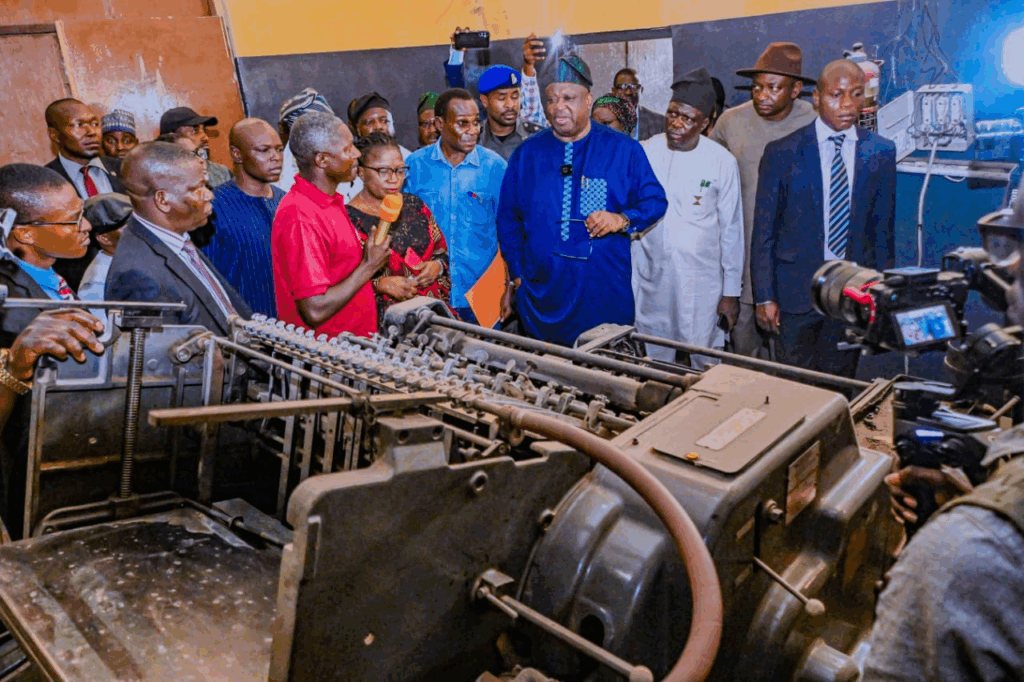
Somewhere in the production area of the newspaper outfit is the Goss Printing Press, which has churned out several thousand copies of the newspaper since the 1970s when it was installed. This German-made machine it was that printed the vivacious reports, seminal articles and prodigious writings that all together constitute the highpoint of The Nigeria Standard story.
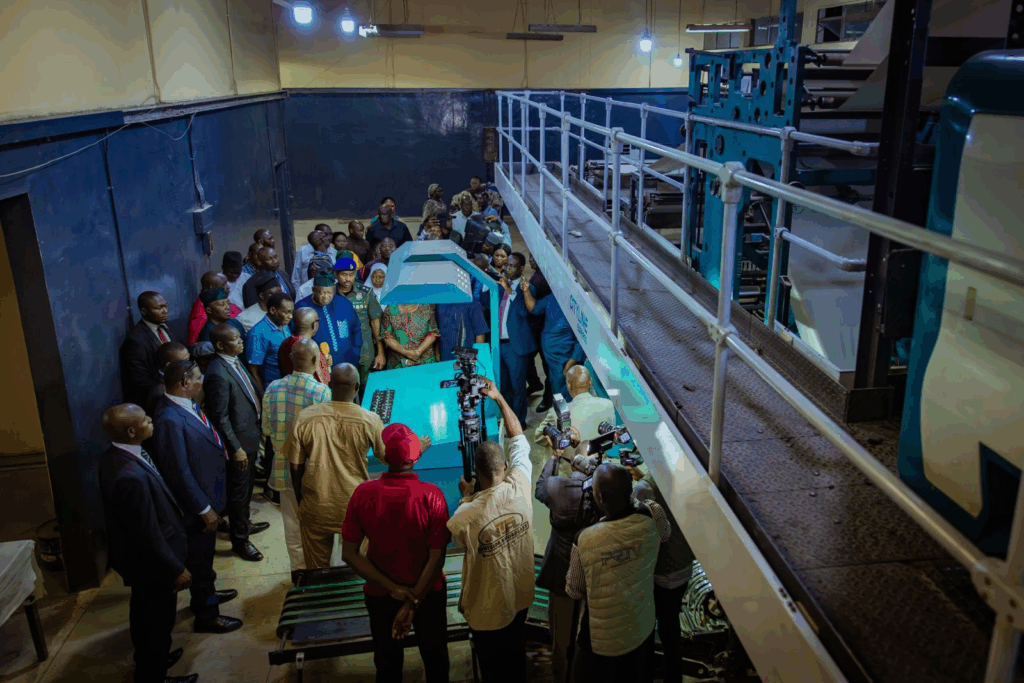
But the legendary Goss now grinds slowly to an impending end. Weakened by age, it idles away as another one, the City-Line Web-Off Set, takes its place. In the midst of the despondency of the moment, this new one embodies the possibilities of the future. With the potential to re-launch the paper onto the path of greatness once again, it awaits the tonic that its own season requires.
Built in India and shipped into the country in 2014, the new press is several notches higher in its technology than anything The Nigeria Standard has ever seen. However, its advanced technology is not an end in itself. Like it was in the past, the philosophy that underpinned the establishment of the newspaper must be in the center of the plans for its rebirth.
There is no gainsaying that recruitment of staff in all departments of the corporation, training of technical personnel for the transfer of knowledge on the new machine and re-orientation of editorial staff are among the essentials for a turn-around that is being sought. But all this can only be realized in a work environment that enhances optimal performance.
Fifty years after its founding, The Nigeria Standard finds itself in the age of the internet and the New Media. Bolstered by an unwavering spirit, it has survived the vagaries of the media environment, outliving many of its kind to be the brand that it is today. For the future, for its relevance and continued survival, its new approaches must fully exploit the vast resources that the information superhighway provides. This is a key requirement of the newspaper as it seeks to reinvent itself in the new age.