



From ABBAS GUNGURA, Bauchi
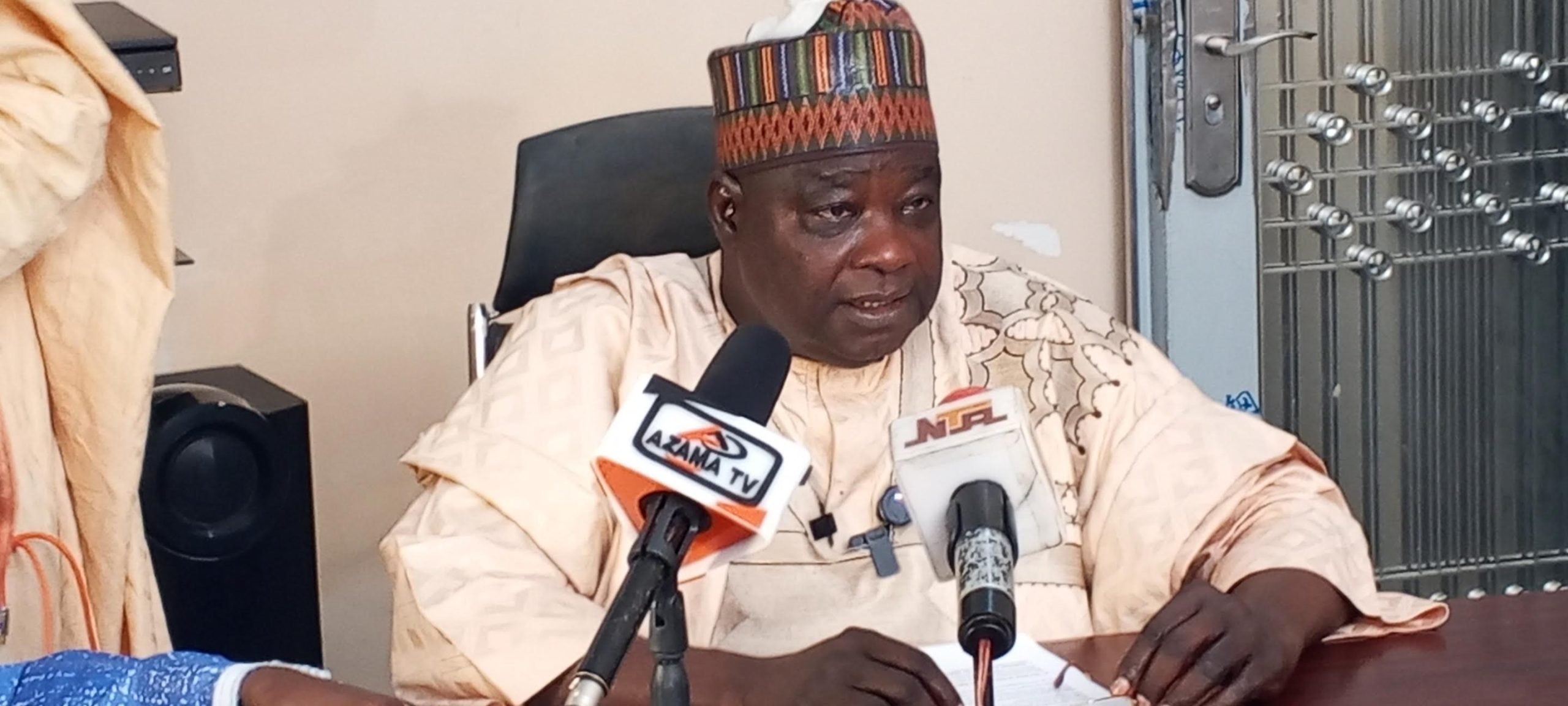
The Chairman of the Bauchi State Chamber of Commerce, Industry, Mines and Agriculture (BACCIMA), Aminu Danmaliki, has challenged the Federal Government following the recent announcement by Dr. Tunji Alausa, Minister of Education, that English Language would now serve as the language of instruction in Nigerian schools from primary to tertiary levels.
He said he stood firmly against scrapping the National Language Policy and reverting to English as the sole medium of instruction, describing the decision as retrogressive and a threat to national identity, children’s future and the survival of indigenous languages.
Danmaliki, while briefing journalists in his office in Bauchi recently, noted that the development had generated strong reactions among stakeholders nationwide, with many raising alarm over the minister’s pronouncement reversing the 2022 National Policy mandating mother-tongue instruction from early childhood to Primary Six.
He said the new policy had generated confusion, controversy and public outcry, stressing that it was “a step backward for education and identity.”
The chairman noted that the Federal Government already had agencies with clear mandates to strengthen and protect indigenous languages, such as the National Institute for Nigerian Languages (NINLAN), Aba — the primary institution established to teach, research, preserve and promote Nigerian languages under the Federal Ministry of Education.
He explained that Nigeria was now choosing the wrong path, despite decades-long commitments to UNESCO and UN conventions which encouraged mother-tongue-based education.
Citing international examples, Danmaliki pointed out that countries such as China, France, Japan, Saudi Arabia, Tanzania and Ethiopia prioritised mother-tongue education as the foundation for national development.
Emphasizing why mother tongue mattered, he said research and global evidence (UNESCO, 2003; World Bank, 2021) showed that children learned best in the language they understood.
He explained that early literacy in mother tongue improved later learning in other languages, including English.
He warned that abandoning mother tongue could lead to cognitive disadvantages in children, who may struggle to grasp abstract concepts taught in an unfamiliar language.
He added that such a move could result in cultural alienation, loss of connection with heritage and increased inequality, especially for rural and poor children who lack English exposure.
Danmaliki pointed out, “A people that abandons its language is abandoning its history, its worldview, cultural memory and sense of belonging.”
He stressed that indigenous knowledge systems — in medicine, agriculture, governance, conflict resolution and ethics — are embedded in local languages.
He warned that abandoning mother tongue weakened Nigeria’s intellectual heritage.
Danmaliki acknowledged that English provided a neutral platform in a multi-ethnic nation, but noted that making it the exclusive medium of education, especially at foundational levels, was “pedagogically unsound and socioculturally harmful.”
He proposed a balanced approach where early education (Primary 1–3) would be delivered in mother tongue or community language, with English introduced gradually.
He added that from primary 4 upwards, instruction could transition into bilingual or English-dominant learning once a child’s conceptual foundation was solid.
He stated that this model had worked successfully in countries such as Tanzania, Ethiopia and Finland, where local languages formed the base of national literacy and innovation.
Danmaliki called on the Federal Ministry of Education, NINLAN, NERDC experts, state ministries of education, traditional institutions, cultural bodies, civil society and the media to urgently work towards reviewing the new policy.
He urged them to ensure that Nigeria’s linguistic and cultural sovereignty was not compromised.