


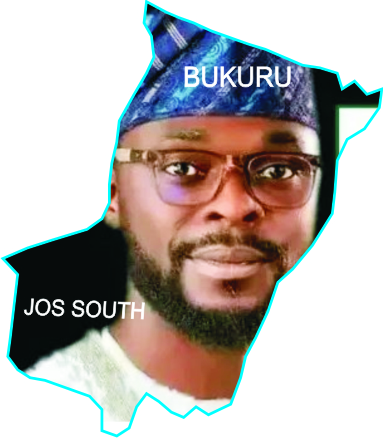

In the run-up to the Plateau State chairmanship election, scheduled for October 9, 2024, as announced by the Plateau State Independent Electoral Commission, PLASIEC, the political arena is buzzing with activity as candidates from various political parties are working assidously and around the clock to capture the hearts of the electorare. In this interview, Mr Silas Patrick Dung, the Peoples Democratic Party (PDP) candidate for Jos South Local Government Council, shares his plans and vision with our reporter, YVONNE ISHOLA, on how he intends to improve the lives of his people, if elected. Excerpts:
As the PDP candidate for the Jos South local government chairmanship election, what motivated you to join the race?
My motivation is, and has always been, service to humanity. This has driven me since childhood. I’ve always been passionate about helping others, so when the opportunity to run for this position presented itself, and seeing the suffering that surrounds us, I knew it was time to step up. There is so much hardship – people are struggling with poverty, insecurity and other challenges. This fuelled my decision to contest because I want to offer my service and help improve the lives of the people. What is even more encouraging is that the people themselves urged me to take this step. They want leadership that can unite us, one that can address the pressing issues we face today.
You seem to be the only candidate whose running mate is a woman. What informed your decision?
Yes, that’s true. My decision to pick a woman as my running mate aligns with my philosophy of service to humanity. I’ve always believed that having women in leadership positions brings balance. Women provide strength, focus and a nurturing perspective that is crucial in governance. It wasn’t just about gender balance for me – it’s deeper than that. I’ve always advocated for more women in governance because I believe that the only way to have a just society is to treat people as humans first, not through the lens of gender.
When the opportunity came to select a running mate, I knew I wanted someone who could bring in new ideas and perspectives. In Plateau politics, you often see the same faces, especially when it comes to women. I wanted to bring in fresh faces, new voices. My running mate is a mother, and that maternal perspective is essential. Mothers understand children and young people in a way that helps when making decisions. This choice also balances the generational gap – she is an older woman, and that reassures the older generation who may feel threatened by younger politicians. Many older people believe that when young people enter politics, they want to replace or “retire” them. Choosing someone older shows that we are not sidelining anyone and everyone has a role to play in governance.
I love what you said about unity being one of your goals and your desire to reduce the youth vices. How do you intend to go about achieving this?
If you’ve lived in Plateau State for the last 22 or 23 years, you’ll be familiar with the crises we’ve experienced – misunderstandings between ethnic and religious groups, leading to conflicts. We’ve had instability for two decades now, and it has created divisions among us. So, the question we’ve been asking ourselves is: How do we restore the unity we once had? I grew up in Jos during a time when it didn’t matter whether you were a Muslim or Christian; there were no boundaries in where we lived. I also come from a family where we have both Muslims and Christians, yet we are one family.
What we plan to do is to initiate regular town hall meetings where different groups – ethnic, religious and political – can come together to engage with one another. I believe that consistent dialogue is the key to building understanding. When people meet regularly, they begin to see each other as brothers and sisters, and the animosity fades. When someone knows that if they do something wrong this week, there will be a community meeting next week where they’ll be held accountable, they’ll think twice before acting. Regular community engagement will naturally reduce misunderstandings.
Also, political leaders themselves need to set an example. Many of the problems we face are aggravated by political gladiators who are not at peace with one another. If we can get the political leaders to come together, sit under one roof, and engage in dialogue, their followers will do the same. When people see that their leaders are working together in harmony, it builds trust. When trust is built, peace follows. So, bringing the gladiators together is a key part of our strategy to foster unity. This is not something we will only talk about during the campaign – it is a core part of my vision for leadership. Dialogue and community engagement will be ongoing throughout my tenure if elected.
What about the issue of youth vices? How do you plan to address that?
Addressing the issue of youth vices is a top priority for us. One of the first things we intend to do is to restore the role of traditional rulers in our communities. These leaders know their people and understand the dynamics in their areas better than anyone else. I remember growing up when visitors to a community would introduce themselves to the local leader, explain why they were there, and how long they intended to stay. It was a system that fostered accountability and security.
Unfortunately, the crises we’ve had in recent years have pushed many young people into drugs. The conflicts have created an environment where young people feel emboldened to engage in violence, often using drugs to numb their fear. We see young people consuming substances like mentholated spirits – something meant for embalming the dead. They take these substances, can’t eat, and many of them die as a result. This is something we need to tackle head-on.
We plan to work closely with community leaders, ensuring they understand the dangers of allowing drug peddlers and illicit businesses to operate in their areas. We’re not against legitimate businesses that sell alcohol, but we need to regulate what’s being sold. Many of these local alcoholic drinks are extremely dangerous, often sold for as little as N50. A drink that cheap is a clear indication that it’s harmful, and we need to get rid of such products.
We will partner with agencies like the National Agency for Food and Drug Administration, NAFDAC, Stadard Organisation of Nigeria, SON, the police, the National Drut Law Enforcement Agecy, NDLEA, and the Nigeria Security and Civil Defence Corps, NSCDC, to clamp down on illegal and dangerous activities in our communities. Community leaders will take responsibility for their areas and report illegal activities, helping us keep our youths safe from the harmful substances that are destroying their lives. By involving traditional rulers and regulatory agencies, we’ll create a safer, healthier environment for our young people.
Bio Data
Mr Silas Patrick Dung was born in the late 1970s. He completed his primary and secondary education before moving to Bauchi for his tertiary education. After his studies, he worked with the Federal Government in Abuja for 10 years. He later relocated to Lagos, then returned to Abuja, and eventually, in 2013, he was invited back to Plateau State by former governor, Da Jonah David Jang. Since then, Mr Dung has dedicated himself to humanitarian work and has volunteered in various capacities. A media professional, Mr Dung has also spent eight years as a sports writer and broadcaster, volunteering with a radio station, where he works to spread positive messages and raise awareness on key issues affecting society.